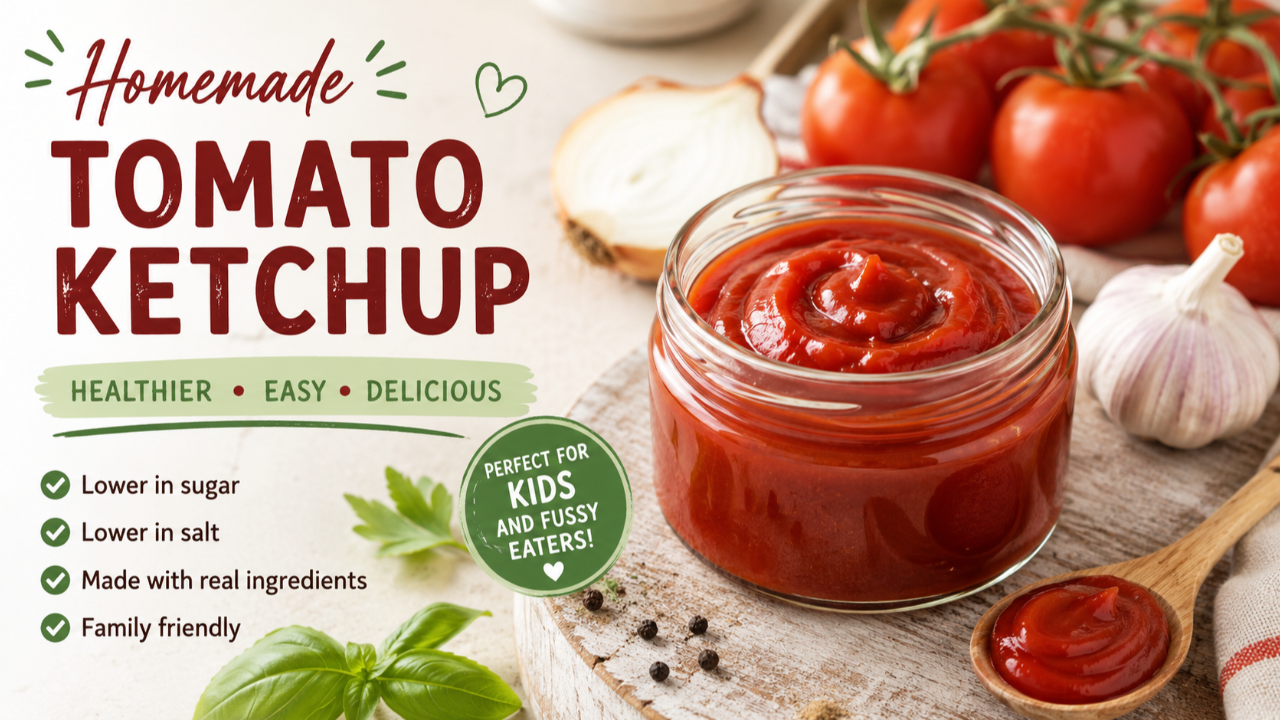
Homemade Tomato Ketchup Recipe
Jun 08, 2026
Homemade Tomato Ketchup Recipe for Kids
A Healthier Ketchup Your Child Will Actually Eat
If your child is anything like most children I work with, ketchup is probably a staple food group in its own right!
Whether it's chips, chicken nuggets, fish fingers, pasta, sandwiches or even vegetables, many children will happily dip almost anything into ketchup. While there's absolutely nothing wrong with enjoying ketchup, many shop-bought varieties can be surprisingly high in sugar and salt.
The good news? Making your own tomato ketchup at home is much easier than you might think. This simple recipe contains less sugar, less salt and uses real ingredients you can feel good about serving to your family.
Why Make Your Own Ketchup?
Homemade ketchup gives you complete control over what goes into it.
Benefits of homemade ketchup:
✓ Lower in sugar than many commercial brands
✓ Lower in salt
✓ Made with simple, recognisable ingredients
✓ No artificial colours, flavours or preservatives
✓ Easy to adjust to suit your family's taste
✓ A fun recipe to make with children
For parents of fussy eaters, homemade ketchup can also be a useful way to gradually introduce children to slightly different flavours while still providing the familiar taste and appearance they love.
Homemade Healthier Tomato Ketchup Recipe
Ingredients
-
1 x 400g can no-salt-added plum tomatoes
-
1 small onion, finely chopped
-
1 garlic clove, minced
-
2 tablespoons apple cider vinegar
-
1 tablespoon maple syrup (or honey for children over 12 months)
-
½ teaspoon ground allspice
-
½ teaspoon ground cinnamon
-
½ teaspoon ground ginger
-
Pinch of cayenne pepper (optional)
-
Salt to taste
Method
-
Place the tomatoes, onion and garlic into a medium saucepan.
-
Bring to a gentle simmer over medium heat and cook for around 20 minutes until the onion has softened.
-
Add the apple cider vinegar, maple syrup, allspice, cinnamon, ginger and cayenne pepper (if using).
-
Stir well and continue simmering for a further 10 minutes to allow the flavours to develop.
-
Remove from the heat and allow to cool slightly.
-
Blend until completely smooth using a hand blender or food processor.
-
Taste and adjust the seasoning if needed.
-
Allow the ketchup to cool completely before transferring to a clean jar or bottle.
-
Store in the refrigerator and use within two weeks.
What's So Good About the Ingredients?
Tomatoes
Tomatoes provide lycopene, a powerful antioxidant that gives tomatoes their red colour. Interestingly, cooked tomatoes contain lycopene in a form that's easier for the body to absorb.
Apple Cider Vinegar
This helps create that classic ketchup tang while acting as a natural preservative.
Maple Syrup
Just a small amount provides sweetness without the large quantities of sugar often found in commercial sauces.
Herbs and Spices
Cinnamon, ginger and allspice add flavour depth naturally, reducing the need for extra sugar or salt.
Serving Ideas
Of course, this ketchup is perfect with chips, but there are lots of other ways to enjoy it too:
-
As a dip for vegetable sticks
-
With homemade sweet potato wedges
-
Alongside fish fingers or chicken goujons
-
Spread inside sandwiches or wraps
-
Stirred into homemade baked beans
-
Mixed with Greek yoghurt for a quick dipping sauce
-
As the base for a healthier BBQ sauce
A Note for Parents of Fussy Eaters
If your child only eats one specific brand of ketchup, don't expect them to instantly accept a homemade version.
Instead, try using the principles of food exposure:
-
Let them help make the recipe.
-
Allow them to smell and stir the ingredients.
-
Serve a tiny amount alongside their usual ketchup.
-
Avoid pressure to taste it.
-
Remember that acceptance often takes multiple exposures.
The goal isn't necessarily to replace their favourite ketchup overnight, but to help them become more comfortable with different foods and flavours over time.
Small Changes Can Make a Big Difference
Healthy eating doesn't have to mean dramatic changes. Often, it's the small swaps and simple homemade alternatives that can make the biggest difference over time.
This healthier ketchup recipe is a great example of how you can reduce sugar and salt while still serving foods your family enjoys.
If you give it a try, I'd love to hear how you get on! Share your photos and tag Little Monkey Nutrition on social media.
And if you're struggling with a fussy eater, be sure to check out our Fussy Eating Reset Programme for practical, evidence-based strategies that help take the stress out of mealtimes.
You could add this section under the "A Note for Parents of Fussy Eaters" heading:
Using Food Chaining to Introduce Homemade Ketchup
If your child is very particular about brands or notices even the smallest change in their food, introducing a homemade ketchup can feel daunting. This is where food chaining can be really helpful. Food chaining involves making tiny, gradual changes from a food your child already accepts towards a new version.
For example, if your child only eats one specific brand of ketchup, start by mixing a very small amount of the homemade ketchup into their usual ketchup. You might begin with a ratio of 95% familiar ketchup and 5% homemade ketchup. Once they are comfortable with that, gradually increase the amount of homemade ketchup over several weeks. Other children may be happy to have the homemade ketchup served in a separate pot alongside their usual ketchup, allowing them to explore it in their own time.
Remember, the goal isn't to trick your child or replace their favourite food overnight. Instead, we're helping them build familiarity and confidence with a slightly different version of a food they already enjoy. Even if they simply tolerate the homemade ketchup being on the table or dip their finger into it, these are positive steps forward and part of the learning process.
This gradual approach reduces pressure, increases acceptance and helps children feel in control of trying new foods.